


Key Takeaways
- Repeated wildlife activity can indicate that an accessible route into the home has not been identified or addressed.
- Roof edges, soffits, attic vents, crawl spaces, and gaps around exterior components can provide access to wildlife.
- A wildlife inspection can connect signs found inside the home with conditions outside that may be allowing animals to enter.
- Wildlife exclusion works best when it focuses on relevant access points rather than sealing openings without understanding their purpose.
- Lake County’s mix of lakes, wooded properties, rural areas, and established neighborhoods means entry-point concerns can vary significantly from one property to another.
You remove an animal from the attic, clean up the obvious mess, and expect the problem to be finished. Then you hear scratching again a few weeks later.
When that happens, the issue may not be that the same animal has returned. Another animal may have found the same opening, or a different access point may still be available somewhere around the property. Until that route is identified, removal alone may only address the immediate intrusion.
That is where wildlife exclusion in Lake County, FL becomes part of the larger solution. Instead of looking only at the animal, homeowners need to understand what made the property accessible in the first place.
Where Can Wildlife Enter a Lake County Home?
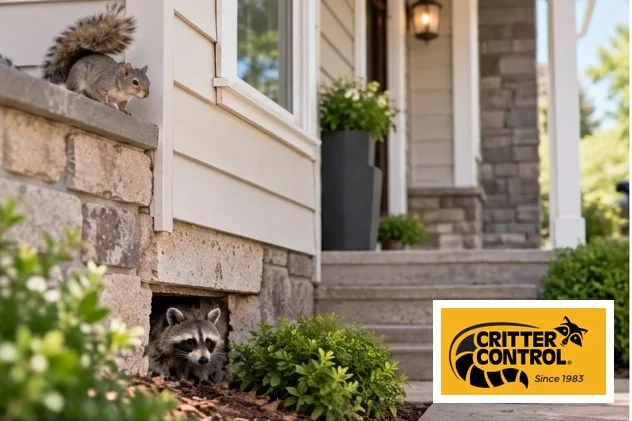
An animal does not necessarily need a large, obvious hole to get into an attic or another enclosed area. Small gaps around roof components, soffits, vents, or places where exterior materials meet can become relevant access points.
Potential areas to investigate include:
- Roof edges and soffits
- Attic and roof vents
- Fascia and other exterior components
- Gaps where building materials meet
- Damaged or loose exterior materials
- Openings around exterior penetrations
- Crawl-space access areas
The surrounding land can affect what has to be considered. Lake County has wooded lands, lakefront properties, rural areas, and developed neighborhoods. A house situated in a forest has a different exterior that will require different things to be assessed than a home that is built in an urban area.
For that reason, a standard checklist can be a starting point, but it should not replace looking at the actual property.
Why Finding the Entry Point Can Be Difficult
Homeowners often notice the evidence inside before they see anything outside. Scratching overhead, disturbed insulation, droppings, nesting material, or an unusual odor can all prompt an attic investigation, but these signs do not necessarily reveal the exact route the animal used.
An opening on one side of the roof may be several feet away from where activity is noticed inside. In other cases, the visible gap may be old and unrelated to the current problem.
This is why wildlife inspection in Lake County should involve more than finding the first hole that looks suspicious. The condition of the opening, signs around it, and evidence inside the structure all need to be considered together.
What Does a Wildlife Inspection Look For?
An inspection can help establish whether wildlife is currently active, where it may have gained access, and which areas of the property have been affected.
That may involve looking at accessible exterior areas as well as attic or other enclosed spaces where signs of activity have been reported. If several potential openings are present, the surrounding evidence can help determine which ones deserve attention.
The Florida Fish and Wildlife Conservation Commission specifically advises property owners to inspect potential entry points such as soffits, attics, and crawl spaces and make needed repairs when there is no evidence of wildlife inside.
What Happens After the Entry Point Is Identified?
Once the wildlife situation has been appropriately addressed, the relevant access points can be evaluated for exclusion. Animal entry points in Lake County can occur in several parts of a home’s exterior, so the appropriate response depends on what the inspection actually finds.
Exclusion is not about sealing every visible gap. A wildlife professional needs to consider whether an opening is associated with the intrusion and whether addressing it falls within the scope of wildlife services.
If the inspection reveals roofing, electrical, HVAC, or structural issues that require specialized work, the homeowner may need an appropriately qualified contractor for those repairs.
For certain wildlife, Florida regulations also affect how removal and exclusion can be handled. The FWC notes that some protected wildlife and removal situations require additional permits or have specific restrictions, so homeowners should not assume that the same approach applies to every species.
What If the Animal Is Gone but the Problem Remains?
The condition of the attic or enclosed space should not be overlooked once the animal has been removed.
Insulation may have been displaced, nesting material may remain, and droppings or other debris can be present where the animal was active. Those conditions may call for cleanup, sanitization, or wildlife-related restoration depending on what an inspection finds.
There can also be clues about the original intrusion. Disturbed insulation near an access point, for example, may help connect what happened inside with a vulnerability outside.
That makes the post-removal inspection useful for another reason: it helps homeowners understand whether they are dealing with an isolated incident or a property condition that deserves further attention.
How Can Homeowners Reduce Repeat Wildlife Problems?
Wildlife prevention in Lake County is more effective when it responds to the conditions found at the property rather than relying on a generic list of precautions.
If an inspection identifies an accessible soffit, that area may need attention. If unsecured food or garbage is attracting wildlife around the property, changing how those materials are stored can also help. FWC recommends securing potential attractants such as garbage, pet food, bird feeders, and other accessible food sources.
The surrounding environment matters, too. Homes near wooded areas or lakes may have more opportunities for wildlife encounters simply because of the property’s setting. That does not mean wildlife will inevitably enter the house, but it does make attention to exterior access points worthwhile.
When Should You Investigate a Recurring Wildlife Problem?
Repeated scratching, new droppings, disturbed insulation, or seeing an animal repeatedly around the roof can all justify a closer look. The same applies when a homeowner discovers an opening but cannot tell whether it is being used.
It is especially useful to investigate when the same type of problem has already resulted in removal. If another animal appears afterward, there may be value in examining the property conditions rather than treating the new incident as completely separate.
Wildlife removal in Lake County addresses the immediate animal problem. Inspection and exclusion address the conditions that may have allowed the intrusion to occur.
Addressing the Entry Point, Not Just the Animal
Wildlife conflicts can become repetitive when the property itself remains accessible. Removing an animal may provide immediate relief, but understanding how it entered gives homeowners a better basis for deciding what should happen next.
For homeowners dealing with recurring wildlife activity, Critter Control® of Lake County can assess the property, identify relevant entry points, and help determine whether removal, exclusion, cleanup, or restoration is appropriate based on the inspection findings.
FAQs
Potential access areas include roof edges, soffits, attic vents, fascia, crawl-space openings, and gaps around exterior components. The relevant entry point varies from property to property and should be assessed alongside signs of wildlife activity.
A recurring problem may be associated with an access point that remains available, another opening elsewhere on the property, or conditions that continue to attract wildlife. An inspection can help determine which factors are relevant.
An inspection can involve looking for signs of wildlife activity, accessible exterior areas, possible entry points, and damage inside affected spaces. The findings can help determine whether removal, exclusion, cleanup, or restoration should be considered.
It is better to determine whether the opening is being used before sealing it. Depending on the species involved, Florida wildlife regulations may also affect how an animal can be removed or excluded.
The property can be evaluated for remaining access points and wildlife-related damage. Depending on the findings, exclusion, cleanup, sanitization, or restoration may be appropriate.