



Key Takeaways
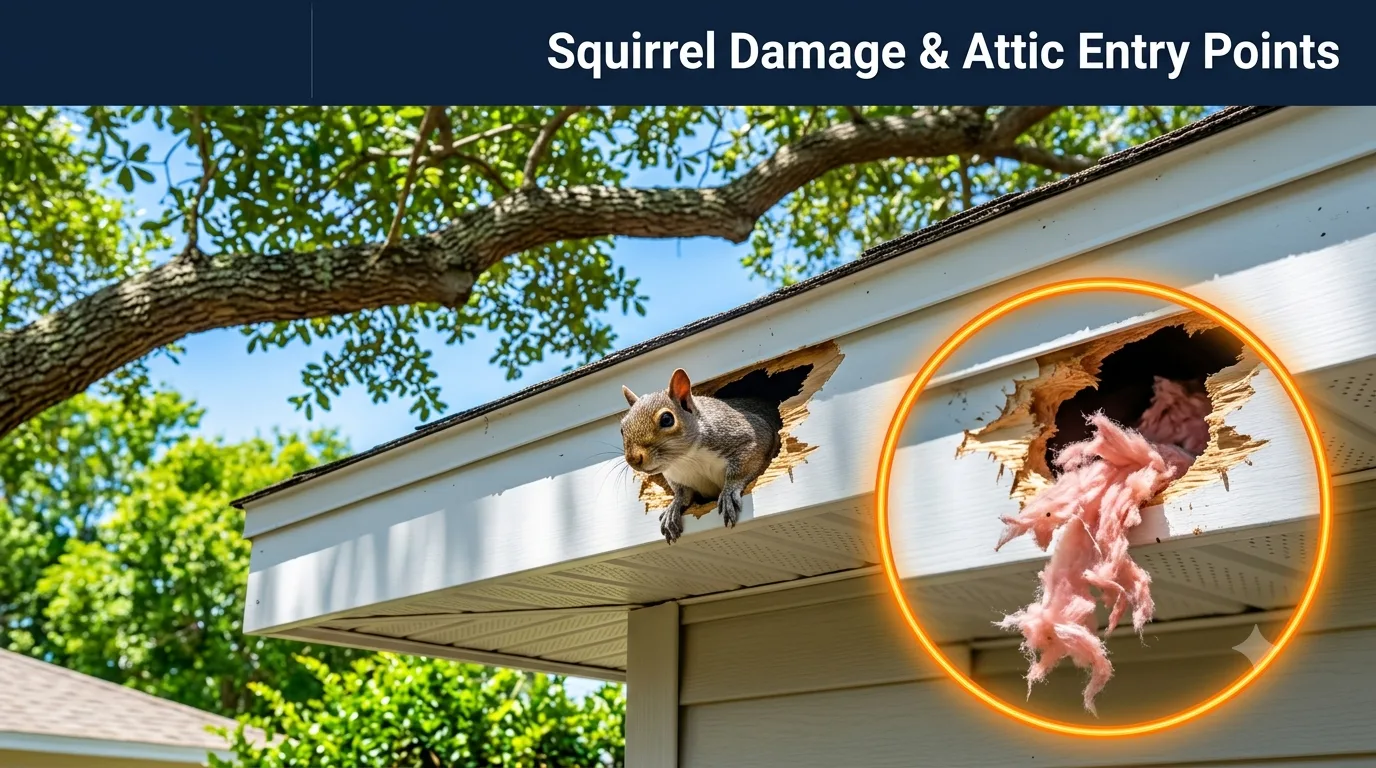
- Squirrels are capable of making their way to attics via damaged soffits, roof gaps, ventilation screens, and openings around utility mains.
- Gnaw marks, displaced insulation, and daytime scratching can help identify squirrel activity, but no single sign confirms the entry point.
- To tell where squirrels entered, one needs to correlate the damage incurred on the exterior to the evidence found in the attic.
- Successful squirrel exclusion in Lake County involves correct removal of these animals, repairing the points where they got in, and assessing if there are other vulnerable entry spots.
Scratching above a bedroom ceiling or unexplained damage around the roofline may indicate that squirrels have found shelter inside a home. In Lake County, mature trees and branches near residential roofs can provide squirrels with convenient routes to elevated openings.
A good assessment compares external Squirrels commonly nest in trees, but attics offer protected spaces when an accessible opening is available. According to the University of Florida’s guidance on Florida squirrels, broken screens, damaged roof tiles, and gaps between roofs and walls can allow squirrels to enter buildings.
1. Examine Soffits, Fascia, and Roof Edges
Soffits cover the underside of roof overhangs, while fascia boards run along the roof’s edge. When these materials loosen, rot, or separate at their joints, they can expose openings that squirrels may enlarge through gnawing.
During an exterior inspection, look for:
- Gaps between soffit panels and fascia boards.
- Bent, loose, or missing sections of roof-edge material.
- Fresh-looking chew marks around wood trim.
- Displaced panels near roof corners and wall junctions.
Pay particular attention to areas where different roof sections meet. Small gaps can be difficult to spot from the ground, especially when they sit behind gutters or blend into dark trim.
2. Check Attic Vents and Utility Openings
Very often attic vents, gable vents and other openings for ventilation can become susceptible when their screens are ripped or protective coverings lose their hold. Squirrels also can use holes created by cables, pipes and other services.
Inspect these areas for torn screening, missing covers, gnaw marks, and openings where exterior materials no longer fit tightly together.
The repair must match the location and purpose of the opening. A vent should not simply be blocked, because doing so can interfere with attic ventilation. Durable screening, metal barriers, or properly fitted replacement components may be suitable, depending on the structure.
Avoid relying on foam or ordinary caulk as a universal squirrel barrier. Squirrels can gnaw through vulnerable materials, so repairs need to address both the gap and the possibility of repeated chewing.
3. Trace Tree Branches and Roof Access Routes
Trees and connected structures can give squirrels access to rooflines without requiring them to climb directly up exterior walls. Branches extending over a roof, vines along siding, and nearby structures deserve attention during an inspection.
Examine Lake County neighborhoods for mature landscaping features where branches could create a clear path to harmful trim, vents, or even holes in the roof. Instead of judging that every tree in the area is culpable, check for a mix of obvious openings and traces of activity.
Pruning branches away from the roof can reduce access, but it will not resolve an existing attic problem if the animal can still reach another opening. Landscaping changes and structural repairs should work together.
4. Connect Exterior Damage With Interior Evidence
A good assessment compares external observations to the internal condition of the building. It distinguishes the possible entry holes from the old or unrelated damage.
| Evidence | What it may indicate | What to check next |
| Fresh gnaw marks near the eaves | Possible chewing to create or enlarge an opening | Inspect the corresponding attic edge |
| Torn vent screening | Potential access through an attic vent | Check nearby framing for activity |
| Displaced insulation or nesting material | Possible shelter or nesting activity | Examine the area without disturbing wildlife |
| Daytime scratching or scurrying | Possible squirrel activity | Compare timing and location with exterior evidence |
| Damaged wiring or wood | Possible animal chewing | Arrange appropriate repairs and confirm which animal caused it |
There isn’t a single pinpointing sign that squirrels are responsible for the damage. Other kinds of rodents and wildlife also can harm the building. Sounds can go through the frames of the building. The fact that squirrels are active during the day can serve as a supporting fact, but it can’t replace the inspection.
Use a three-point verification method: identify a possible access route, match it with physical evidence, and confirm related activity inside. If these clues do not align, continue the inspection instead of sealing the first visible gap.
5. Why Squirrel Removal Must Include Exclusion
Failure to remedy the entrance point after having removed pests from the premises renders the home susceptible to subsequent infestations. However, if the opening is sealed while the squirrels remain in the attic, you may end up trapping the squirrels in the attic.
Professional squirrel removal in Lake County should consider the animal’s location, possible nesting activity, accessible openings, and appropriate removal methods. Once the animals have been dealt with, repairs should secure verified entry points and address other weak areas along the roofline.
For those homeowners with an issue of squirrels in the attic in Lake County, the intention is not just to put an end to the noise. It is to discover the entry point of the animal, address the issue in a safe manner, and lessen the chances of future intrusion.
Critter Control of Lake County provides wildlife services for homeowners facing animal intrusion. Visit Critter Control of Lake County to explore local inspection and squirrel removal options.
Gnaw marks at the ends of roofs, broken vent screens, soiled insulation, nesting materials, and scratching/scurrying sounds during the day are common indicators of the presence of squirrels. You can get help determining if squirrels are the culprits by having an inspection done.
Possible access points for squirrels include broken soffits, gaps in the fascia, roof-to-wall joints, broken vent screens, and openings in the utility wires entering the house. Another possible entry point is overhanging branches that provide access to these points.
Yes. Squirrels may chew wood, insulation, and electrical wiring while establishing or using an attic shelter. Suspected wiring damage should be assessed by a qualified electrician.
Closing an entry point that has been validated stops animals from coming through that entry point while not preventing them from using other points of access. Ensure animals are not hiding in corners when fixing the entry point and look for problems related to the roof.
Squirrel exclusion involves identifying access points, addressing the animals inside, and repairing openings with suitable materials. A thorough approach also considers ventilation, existing damage, and other potential entry routes.