



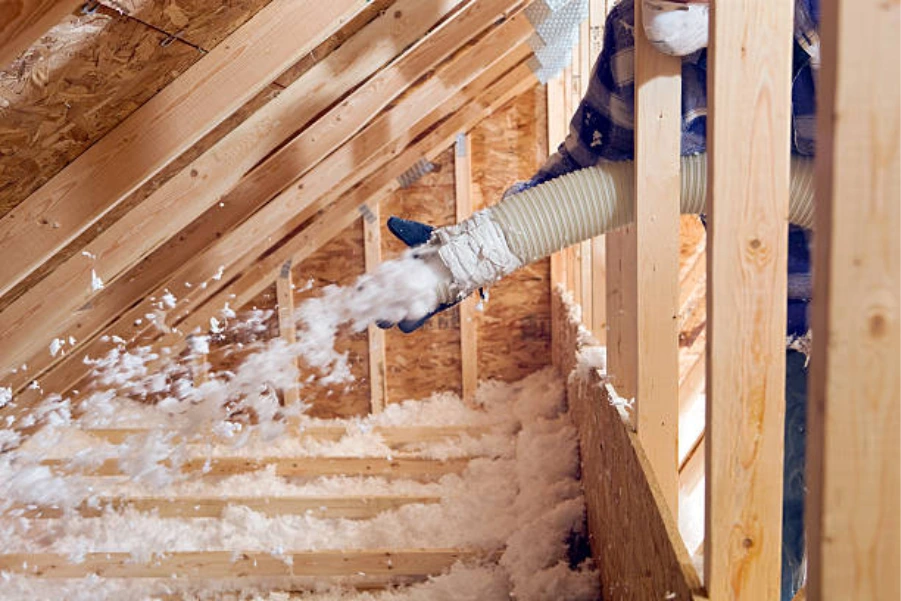
Most homeowners are unaware of their attic insulation. This happens because it’s out of sight, it’s doing its job; for homeowners, it’s easy to forget unless there’s a problem.
But the problem starts when wildlife gets inside your home. Insulation is often the first place they look to settle, and it is the first place where serious contamination begins. And most people don’t realize this: contaminated insulation in your attic can directly affect the air you breathe every day.
Rodent Control Lake County: Why Insulation Becomes a Target for Wildlife
For animals, your attic insulation is the ideal nesting environment. It’s warm. It’s soft, and it’s completely undisturbed. Rodents, bats, and other wildlife want to live there.
They get into insulation, tear it apart, and build nests inside it. At the same time, they leave behind droppings, urine, and bacteria that soak deep into the material. Over time, clean insulation turns into a contaminated layer filled with waste and debris. And that’s where the real problem begins.
Rat Removal Lake County: Contamination Doesn’t Stay Contained
Many homeowners think attic issues are isolated, but they’re not. Air moves throughout your home through small gaps, vents, ductwork, and natural air circulation, which allows attic air to mix with indoor air.
When insulation becomes contaminated, particles from droppings, urine, and nesting debris can travel through these pathways and enter your living space.
That means the air inside your home can carry:
- Dust from dried droppings
- Bacteria and pathogens
- Fungal spores
- Odor particles
Bat Removal Lake County: How Air Quality Starts to Decline
The impact isn’t quick; it builds over time. As insulation becomes saturated with waste, odors begin to develop. These smells can move through vents and ceiling gaps, making the air feel stale. At the same time, contaminated particles can become airborne when airflow disturbs insulation.
Contaminated insulation includes:
- Persistent odors that don’t go away
- Increased dust in the home
- Allergy symptoms
- Respiratory irritation
- Headaches or discomfort indoors
Health Risks You Shouldn’t Ignore
Wildlife contamination can pose real health concerns. Rodent and bat droppings can cause diseases and airborne pathogens. When these droppings dry, particles can become airborne and be inhaled.
Contaminated insulation also causes:
Respiratory Problems
Airborne particles can irritate the lungs and can worsen your allergy symptoms.
Mold Growth
Urine can create moisture, which can allow mold to grow within insulation and cause air quality issues.
Parasites and Secondary Contaminants
Most of the time, wildlife carries fleas, mites, and other parasites that can spread beyond the attic. For households with children, pets, or the elderly, these risks become even more serious.
Energy Efficiency Takes a Hit Too
Contaminated insulation also stops functioning. When animals come through it, compress it, or tear it apart, insulation loses its effectiveness. As a result, your home struggles to maintain a consistent temperature, leading to higher energy bills.
You may also notice:
- Rooms that won’t stay cool or warm
- Increased HVAC usage
- Rising utility costs
Pest Control Lake County: Why “Cleaning” Isn’t Always Enough
Most homeowners make this common mistake; they assume the problem can be cleaned up easily. But insulation doesn’t work like a hard surface. Once it’s contaminated, waste materials spread through the fibers. Odors soak in. Bacteria remain embedded.
Even if the animals are gone, the contamination stays. In many cases, professionals like Critter Control® recommend full removal and replacement because the damage is widespread and difficult to reverse.
Signs Your Insulation May Be Contaminated
You don’t always need to see the attic to know there’s a problem.
Look for signs like:
- Persistent musty or ammonia-like odors
- Increased allergy symptoms indoors
- Scratching noises followed by odor issues
- Uneven temperatures in your home
- Higher energy bills without explanation
- Visible droppings near attic access points
If you’ve previously dealt with rat removal in Lake County or bat removal in Lake County, but didn’t address the insulation, contamination may still be present.
Why Professional Help Matters
Contaminated insulation is not a DIY project.
Proper handling requires:
- Safe removal of contaminated materials
- Disinfection of affected areas
- Identification and sealing of entry points
- Replacement with clean insulation
Without these steps, the problem often returns—or, worse, continues to affect your home silently.
That’s why homeowners dealing with wildlife issues should rely on professional services for solutions that go beyond simple removal. Working with trusted providers like Critter Control® ensures the issue is handled completely, from removal to cleanup and prevention, because removing the animal is only half the job.
Protecting Your Air Starts Above You
The condition of your insulation plays a bigger role in your home’s environment. When it’s clean, everything works. But when it’s contaminated, it can quietly affect the air you breathe every single day. Whether it’s rodents, bats, or other wildlife, the impact doesn’t stay hidden for long.
That’s why many homeowners turn to professionals like Critter Control® to restore their attic environment fully. Learn more about our services. And addressing it early can make all the difference for your health.
Is Your Attic Insulation Affecting Your Air Quality?
Don’t let contaminated insulation impact your health and comfort. Contact our experts today for a complete inspection and safe insulation removal solution.